Most people budget for the first treatment. What they don’t budget for is everything after.
That first box of cream, that first clinic session: it all feels manageable. Then you’re three months in, halfway through a treatment series, realizing the results are fading faster than your bank account. Sound familiar? You’re not alone.
Here’s the part most people don’t expect: the real cost of cellulite treatment (professional or at-home) only becomes clear after months of use or multiple clinic sessions. The upfront price is almost never the full picture. Maintenance sessions, replacement creams, follow-up treatments, add-on products: these are the costs most guides conveniently skip.
This guide gives you actual numbers for six months and twelve months of spending across both the professional vs at-home cellulite treatments debate. It covers what realistic results look like, what the hidden ongoing costs are, and how to figure out which path makes sense for your situation, your cellulite type, and your budget.
If you’re about to spend money on cellulite treatments, read this first.
Who This Guide Is For (And What You’ll Get)
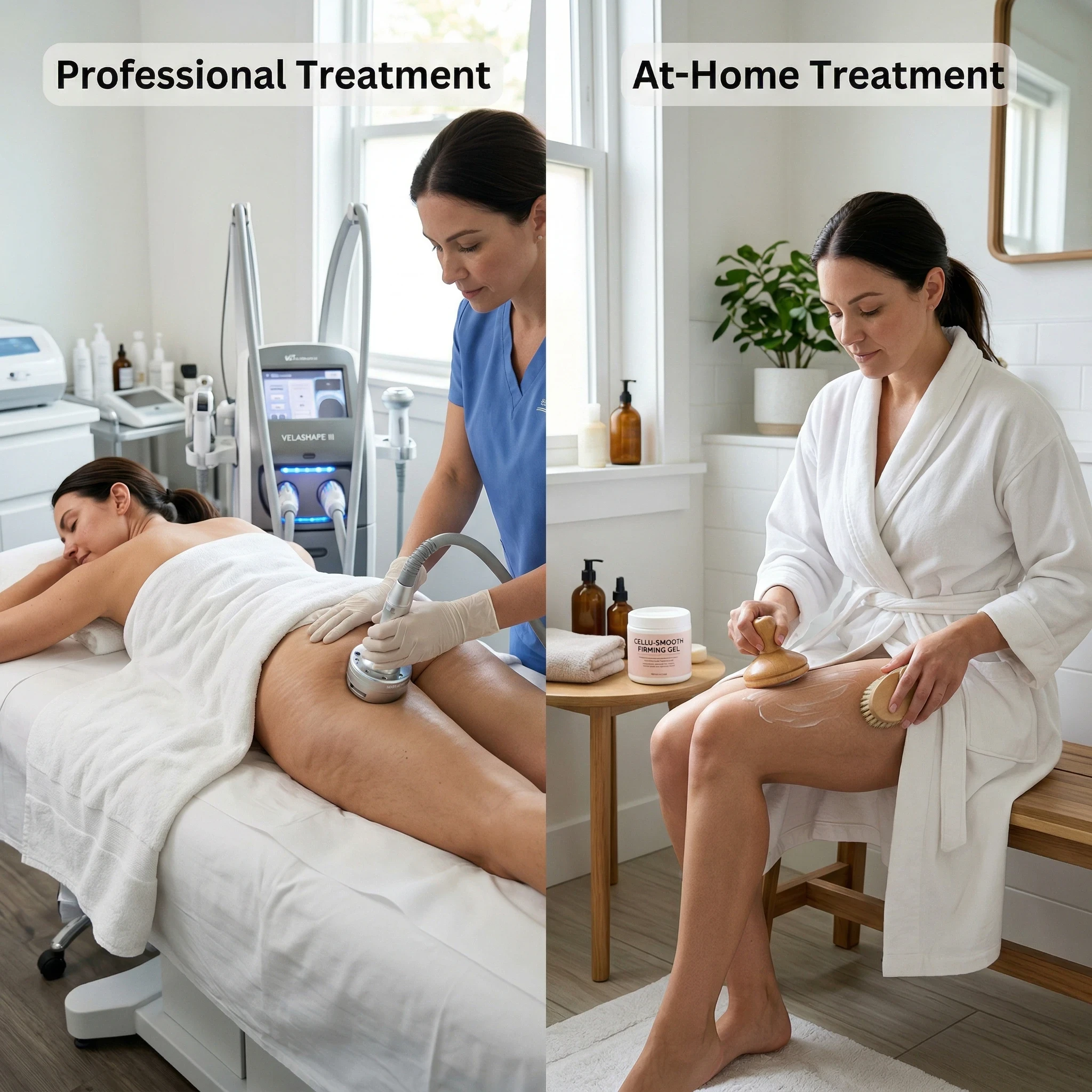
This is written for anyone weighing up clinic procedures against a home routine. Whether you’re curious if a $200 gadget can deliver what a $3,000 treatment course does, or just want to know what those biweekly clinic sessions honestly add up to over a year.
You’ll get real cost comparisons, honest talk about what actually works (and what mostly empties your wallet), and zero miracle-fix hype. There are also links to full-length guides and detailed reviews for anyone who wants to dig deeper before spending anything.
Quick Answer: Which Is Cheaper and Which Works Better?
At-home solutions cost significantly less month to month, but you’re playing the long game for subtle, gradual improvements. Professional treatments deliver more dramatic changes faster, but the price stacks up quickly, and ongoing sessions are almost always needed to keep results from fading.
Many people end up doing both: booking a professional treatment upfront for a meaningful push, then using home-based care to stretch out those results. That’s usually where the best balance between cost and visible, lasting change sits. Understanding both the hard numbers and the realistic outcome expectations is how you figure out which strategy actually fits your body and your budget.
At-Home Cellulite Treatments: Costs and What You Actually Get
Creams and Topicals
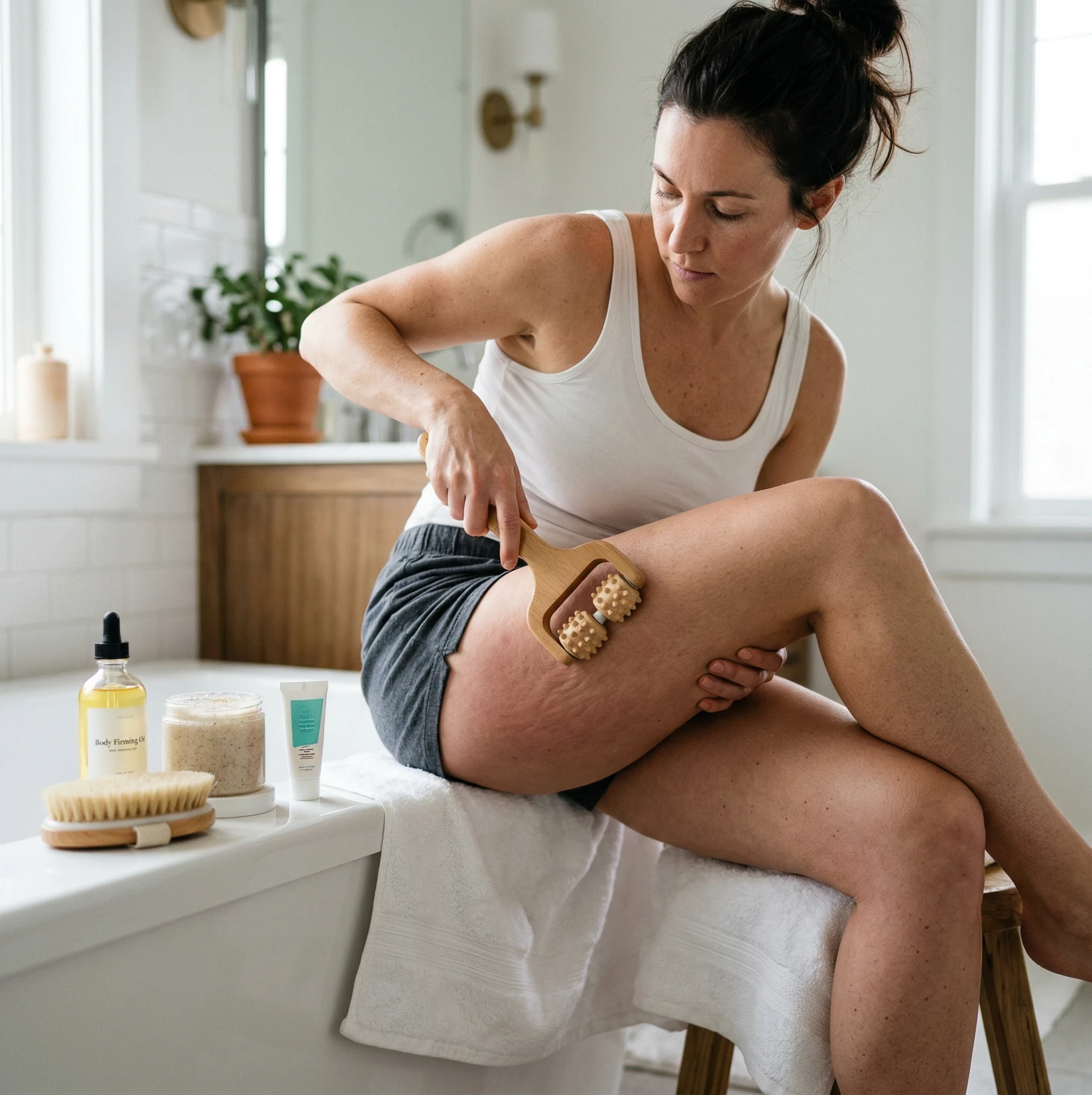
Most people start here. It’s the easiest entry point and fits into any routine without much disruption. Cellulite creams typically run $20 to $80 per tube, lasting about a month. Common active ingredients include caffeine, retinol, and herbal extracts. Results are mostly surface-level: a temporary tightening or plumping effect that makes skin look a little smoother while you keep using the product.
Once you stop applying, the effect fades. For light, superficial dimpling, some people do notice their skin feeling firmer with consistent use. Just don’t expect deep dimples to disappear. Used as part of a broader routine, creams can make a real difference in how your skin feels day to day, even if they’re not doing heavy structural lifting.
Exercise-Based Programs (The Underrated Option)
Strength training and targeted exercise don’t get the attention they deserve in cellulite conversations. For many people, they deliver the most lasting skin changes of anything on this list. Most digital programs are a one-time fee between $25 and $50. Ongoing gym access runs $10 to $50 per month.
One of the more popular approaches in this space is Joey Atlas’s Symulast Method, which focuses specifically on the muscle groups underneath cellulite-prone areas. If you want the full details before committing, you can read a full breakdown of the Joey Atlas Symulast method here.
The catch is patience. Results build slowly. But the changes, when they come, tend to stick, and the broader health and body confidence benefits are a real bonus that no cream or clinic session can match.
Supplements and Pills
Cellulite-reducing supplements are marketed hard these days. Common products like Cellinea average $40 to $70 per month. The research behind most of these is limited, and real-world results tend to be mild at best. They can sometimes help with water retention or skin thickness, and some people find them a useful small boost when stacked with other approaches.
For anyone wanting to know exactly what’s inside these capsules and whether the ingredients hold up, see my detailed Cellinea cellulite pills review here, which covers ingredients, results, and side effects. Most experts treat supplements as a supporting tool rather than a core solution. If you have any health concerns, check with your doctor before starting anything new.
Massage Tools and Devices
This category covers everything from basic foam rollers to handheld massagers and higher-tech devices with suction or vibration. Prices range from $20 for a manual roller up to $300 or more for advanced gadgets. Most are a one-time purchase, though some higher-end devices need replacement gels, creams, or heads every few months, adding $20 to $50 in recurring costs.
Regular use improves lymphatic flow and gives skin a temporarily smoother appearance. Actual results depend heavily on how consistently you stick with it and how long each session runs. If motivation is a challenge, this can be the first thing to drop from a routine. But for many people it becomes a genuinely enjoyable part of self-care, which is exactly what keeps the results coming.
Total At-Home Cost: 6 Months vs 1 Year
Based on what most people actually commit to, here are two realistic at-home scenarios:
Basic At-Home (Creams + Exercise): Budget roughly $25 per month for cream, plus a one-time $35 for an exercise program (or $10 per month for gym access). Over six months: around $185. Over a year: around $370.
Advanced At-Home (Device + Program + Products): Expect $150 to $300 upfront for a massage device, $50 for a full exercise program, plus $30 per month for creams and $45 per month for supplements. Over six months: $500 to $750. Over a year: $900 to $1,300, front-loaded due to the device cost.
Actual improvements: Mild dimpling can get noticeably smoother. Deep cellulite typically becomes a bit less visible rather than gone. Consistency is the deciding factor, and skipping the routine usually means results fade fast. For the best at-home vs professional cellulite results comparison, the numbers only tell half the story. Commitment to a routine tells the other half.
Professional Cellulite Treatments: Costs and Results
Radiofrequency and Laser Treatments
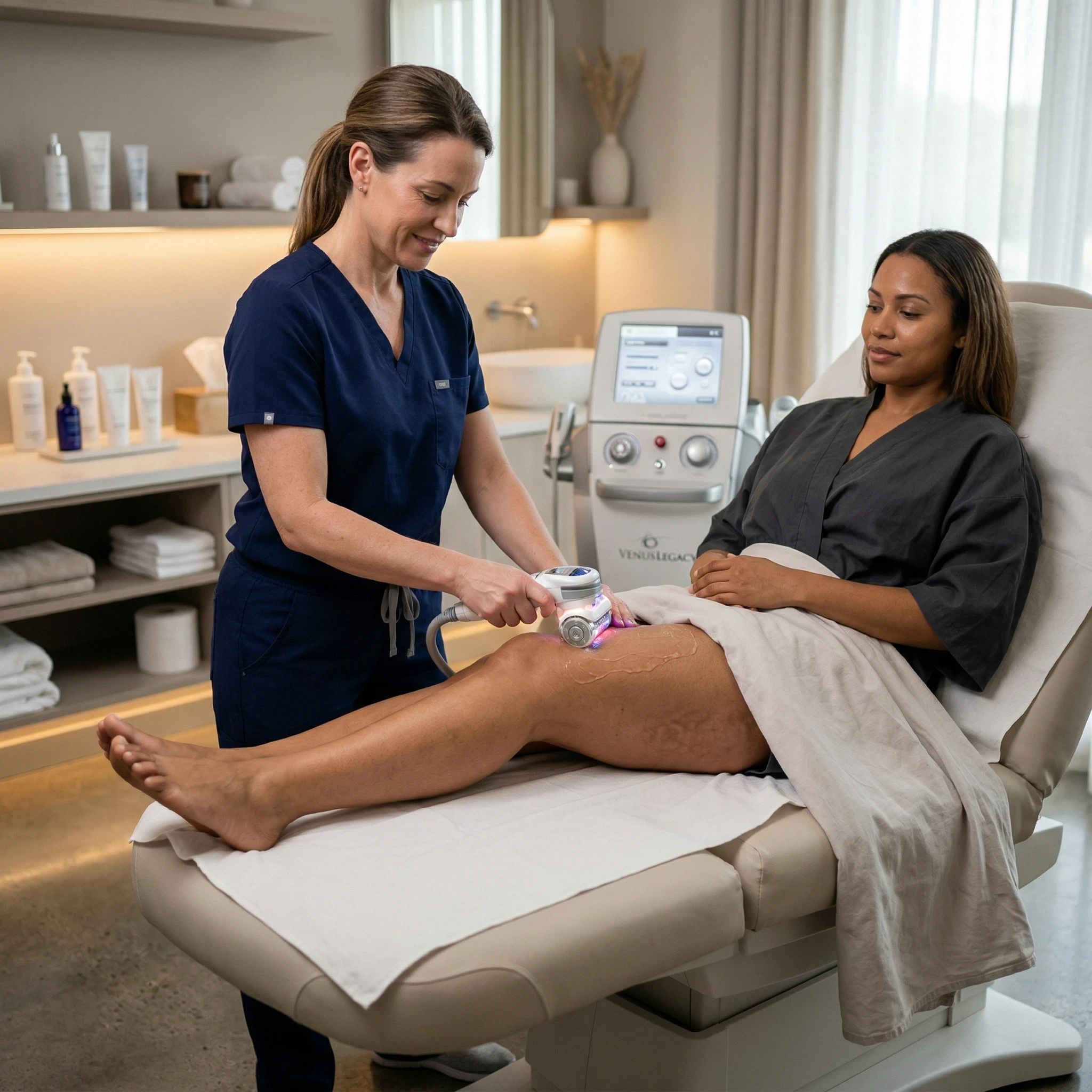
Radiofrequency (RF) and laser sessions work by heating deep skin layers to stimulate collagen production and break down fat. Single sessions cost $150 to $400, but clinics typically recommend 6 to 12 visits for a full program, coming in at $900 to $4,000 over a few months. Most people notice visible improvement after 4 to 6 appointments.
Maintenance sessions every 2 to 4 months are almost always needed to hold onto results, typically billed at the single-session rate. Dermatologists generally describe RF as one of the better-supported non-invasive options for mild to moderate cellulite, though they are consistent on one point: no single course of treatment is permanent.
Subcision Treatments
Subcision involves breaking up the fibrous bands beneath the skin that create the dimpling effect. Cellfina is the most widely known branded version. A single treatment area typically costs $2,500 to $5,000, and it’s often marketed as a longer-lasting fix for moderate to severe cellulite.
Results can last well, but most clinics recommend a yearly maintenance session at $1,000 to $2,000, as effects do diminish over time. Ask your provider directly about their specific maintenance expectations before committing. Not all clinics are upfront about this.
Injectables (Collagen Stimulators and Similar)
Injectable treatments work by dissolving fibrous bands below the surface or encouraging collagen remodeling. A full treatment course generally runs $2,000 to $3,000 for several rounds spaced weeks apart. Topping up every 6 to 12 months keeps results looking smoother, typically at around half the initial course cost.
Results can be impressive, particularly for moderate to severe cases. The thing to keep in mind: follow-up sessions are a real and recurring budget item, not something you can skip after the first year.
Acoustic Wave Therapy (Shockwave)
This procedure uses high-energy sound waves to stimulate blood flow, boost collagen, and loosen connective tissue. Each session costs $100 to $250, with 6 to 10 sessions recommended for best effect ($600 to $2,500 total). Follow-ups every 2 to 3 months run at single-session pricing.
This is where things get interesting: results vary more here than with most other professional options. Some people see moderate improvement; others barely notice a difference. It’s worth asking your provider how well it matches your specific cellulite type before booking a full course.
Total Professional Cost: 6 Months vs 1 Year
Professional plans usually fall into three ranges depending on how aggressive the approach is and how many areas you’re treating:
Entry Level Plan: One basic 6-session RF course for a small zone ($900 to $1,200). Add 1 to 2 maintenance sessions for a yearly total of $1,100 to $1,600.
Mid-Range Plan: A combination of RF/laser plus a course of injectables for moderate cellulite. Expect $3,500 to $4,500 upfront, plus around $500 per year for maintenance.
Premium Plan: Full thighs and glutes, with a mix of subcision (Cellfina) and ongoing shockwave sessions for maximum change. First-year cost: $5,000 to $8,000. Annual upkeep: $1,500 to $2,500.
Clinics sometimes gloss over maintenance costs during the initial consultation. Factor them in from day one, and always ask for a clear breakdown of expected renewal schedules and touch-up fees before committing to anything.
Side-by-Side Cost Comparison
Here’s what the numbers look like when you put everything side by side. This covers cellulite treatment cost over time across all four realistic approaches:
| Option | 6-Month Cost | 12-Month Cost | Time Investment | Expected Results |
|---|---|---|---|---|
| At-Home (Basic) | ~$185 | ~$370 | 10–30 min, 3–6 days/week | Subtle smoothing |
| At-Home (Advanced) | $500–$750 | $900–$1,300 | 30–45 min daily | Moderate improvement |
| Professional (Entry) | $900–$1,200 | $1,100–$1,600 | Clinic visits | Visible smoothing |
| Professional (Premium) | $4,000–$8,000 | $5,000–$10,500 | High time + downtime | Strong results |
Cost Per Result: What Are You Actually Paying For?
This is the section most cost guides skip. Not just what things cost, but what you actually get per dollar spent.
With at-home treatments, you’re paying a low monthly rate for slow, gradual improvement. The investment is relatively modest, but so is the visible change, especially in the early months. Creams and massage tools can smooth and firm the skin surface, but they aren’t reaching the structural causes of deep dimpling. Exercise is the exception: the changes it produces are slower to arrive but longer to last, and the cost-to-result ratio over a full year is genuinely strong.
With professional treatments, you’re paying more upfront to get faster, more visible results. A well-structured RF or subcision course can produce changes in 8 to 12 weeks that at-home methods might take 12 months to approach, if they can reach that level at all. The honest trade-off: those results aren’t permanent. Maintenance is built into the model, whether clinics make that obvious or not.
Think of it this way. At-home is renting a slow improvement over time. Professional is buying a faster result that still needs upkeep to hold its value.
The smartest use of money? Most people get the best cost-per-result by doing one round of professional treatment to get meaningful visible change, then shifting to a consistent at-home routine to maintain it. That approach avoids the cycle of repeated expensive clinic visits while keeping results alive longer.
Hidden Costs Most People Miss
The prices quoted in clinic brochures and product listings are almost never the full story. When you’re budgeting for any cellulite treatment approach, these are the costs that tend to catch people off guard:
• Travel to and from clinics: A 6-session RF course means 6 round trips. For many people that’s a meaningful additional cost, especially in cities where parking or transport isn’t cheap.
• Downtime and missed workouts: Some professional treatments (particularly subcision) require a few days of reduced activity. That’s time off the exercise routine that supports your results.
• Replacement products and consumables: Massage devices often need gels or replacement heads. Creams run out. Supplement supplies need restocking. These add up faster than the initial purchase price suggests.
• Upsells during consultations: Clinics commonly recommend add-on treatments or booster sessions once you’re in the door. It’s worth going in with a firm budget and asking to see all costs in writing before agreeing to anything.
• The gap between sessions: When professional results start to fade before your next scheduled appointment, many people fill the gap with at-home products they hadn’t budgeted for.
None of these are reasons to avoid treatment. They’re just the numbers that honest budgeting needs to include from the start.
The Reality Check Nobody Likes Hearing
No cellulite treatment, professional or at-home, permanently removes cellulite. That’s not a pessimistic take; it’s the consistent position of dermatologists and clinical researchers who study this. Cellulite is structural. It’s caused by fibrous bands beneath the skin, and those bands don’t disappear with any currently available treatment.
What treatments do (the good ones, used consistently) is reduce its visibility. Some do that dramatically and quickly. Others do it gradually over months. But the moment you stop maintaining any treatment, results begin to fade. This is true whether you’ve spent $300 on home gadgets or $6,000 on a clinic package.
Understanding this upfront isn’t discouraging. It’s actually useful budget information. It means you should plan for ongoing costs from the start, not treat maintenance as a surprise add-on.
What Most Articles Don’t Tell You
Ongoing costs add up on both sides. Home gadgets break or need consumables. Clinic results fade without regular sessions. Neither route is a one-time spend, and the guides that present them that way are setting you up for sticker shock.
Maintenance matters more than the initial treatment. Ask any honest clinician and they’ll tell you that how long you keep results is almost entirely about what you do after the main treatment phase. Stopping usually means dimples return within a few months.
Not all cellulite responds the same way. Hard, deep-set dimpling typically needs more aggressive professional tools (subcision or injectables). Soft, mild cellulite tends to respond much better to topicals and muscle-building over time. Identifying your type early saves a lot of wasted money.
Clinic package pricing usually shows you Phase 1. It doesn’t show you the year two renewal, the touch-up visits, or what happens when results start fading and you go back. Always ask for the full-year cost projection, not just the introductory package.
Which Option Is Right for You?
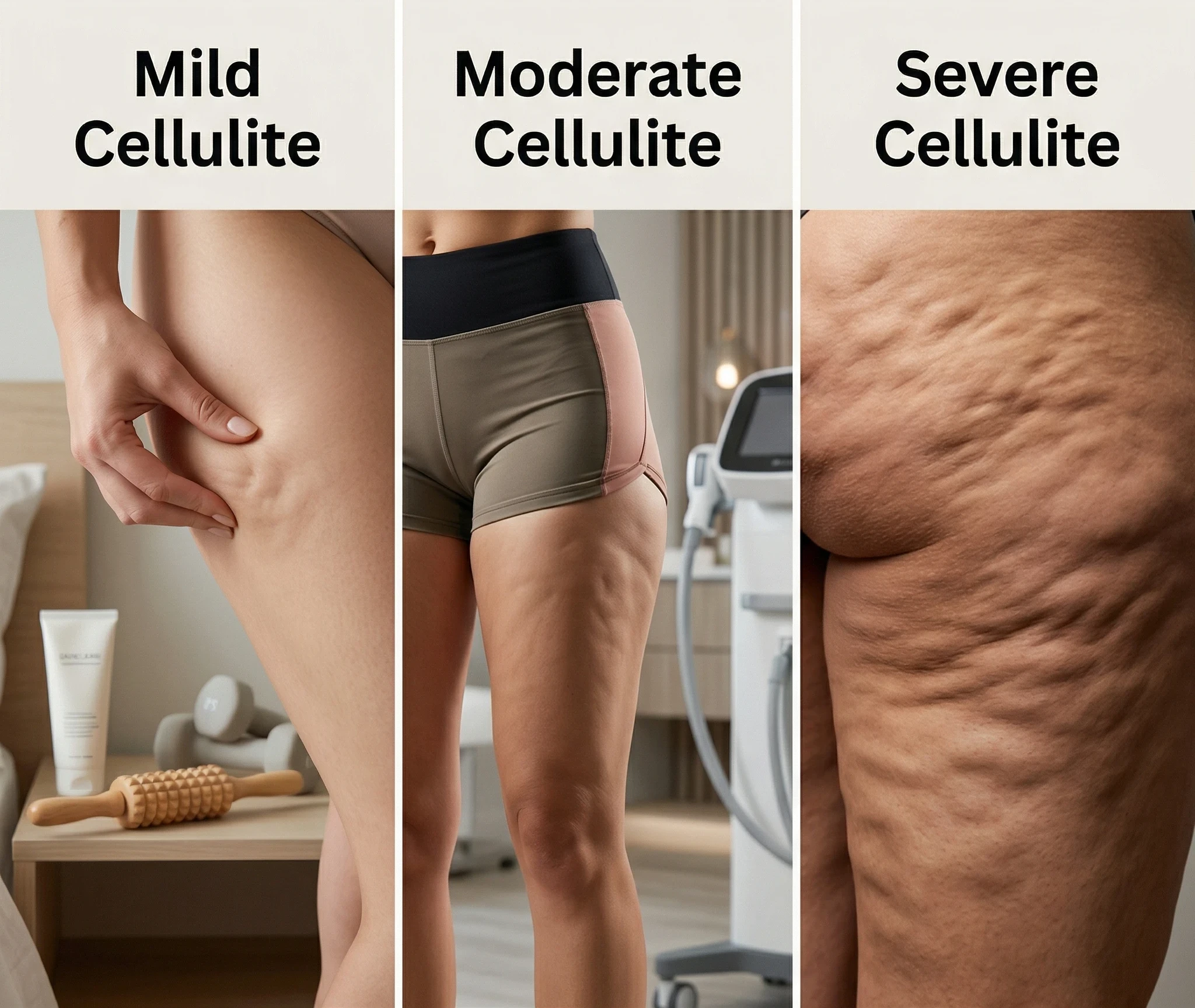
Mild Cellulite (Dimples Only Visible When Skin Is Pinched)
Home routines (creams, massage, and strength training) can usually keep things smooth with patience and consistency. This is a strong fit for anyone on a budget who’s comfortable playing the long game. The routine builds overall skin health and body confidence without requiring clinic visits or major spending.
Moderate Cellulite (Dimples Visible Standing, Limited in Depth or Area)
A combined approach usually works best here. One or two rounds of professional treatment to get meaningful smoothing underway, followed by consistent at-home massage and toning exercises to maintain. This path gives you flexibility and visible results without requiring frequent clinic visits. It’s where most people find the best cost-to-result balance in the professional vs at-home cellulite treatments decision.
Severe Cellulite (Pronounced, Multiple Dimples Across a Larger Area)
Professional treatments deliver the most meaningful visible change for deep structural cellulite, particularly subcision or combined device protocols. At-home products on their own don’t address the root structural issues. Using home strategies alongside professional care can help maintain results, but if significant change is the goal, clinical treatment is the more realistic path. Go in with a clear plan for maintenance costs across the year, and make sure you’ve accounted for recovery time if subcision is part of the plan.
Best Strategy: Combining Both
Pairing a professional treatment cycle with a solid home routine gives the strongest results per dollar spent. Book a clinic package for an initial push to get visible change quickly, then shift to exercise, massage tools, and maintenance creams to stretch and sustain those results. This is where the money goes furthest.
This approach also avoids the stop-and-start cycle that leads to inconsistent results from repeatedly expensive clinic courses. A steady home routine between professional top-ups keeps improvement more consistent and predictable over time.
Final Verdict: Where Your Money Is Best Spent
Where your budget goes best depends on three things: where you’re starting from, how quickly you want visible results, and how much ongoing maintenance cost you’re prepared for.
If mild improvement is the goal, at-home is a genuinely solid and affordable option. For deeper dimpling and faster visible change, one round of professional treatment is probably worth the investment, but go in with a realistic plan for what maintenance will cost in year two and beyond.
For a full breakdown of strategies for combining both approaches and getting the most out of your budget, the main Cellulite Solutions Guide covers everything in depth. Whatever path you choose, consistent effort over time is what produces lasting results, not any single treatment, expensive or otherwise.
Leave a Reply