Connective tissue might not get much attention, but it’s incredibly active; it’s not just a static layer under the skin. Connective tissue, which includes fascia, collagen, and elastin, adapts and responds to stress, nutrition, hormones, and how you move. Visible changes in skin, such as dimpling and cellulite, are directly tied to how this tissue gets remodeled over time. Real improvement happens with consistent biological adaptation, not overnight fixes.
The Science of Connective Tissue Remodeling
Connective tissue is always in a state of change. It breaks down, rebuilds, and reorganizes in response to internal and external signals. Your habits, movement, nutrition, and overall lifestyle can actually shape these processes. Changes in how firm, smooth, or dimply your skin appears are genuine changes in your tissue’s structure; there’s nothing superficial about it.
What Is Connective Tissue and Why It Matters
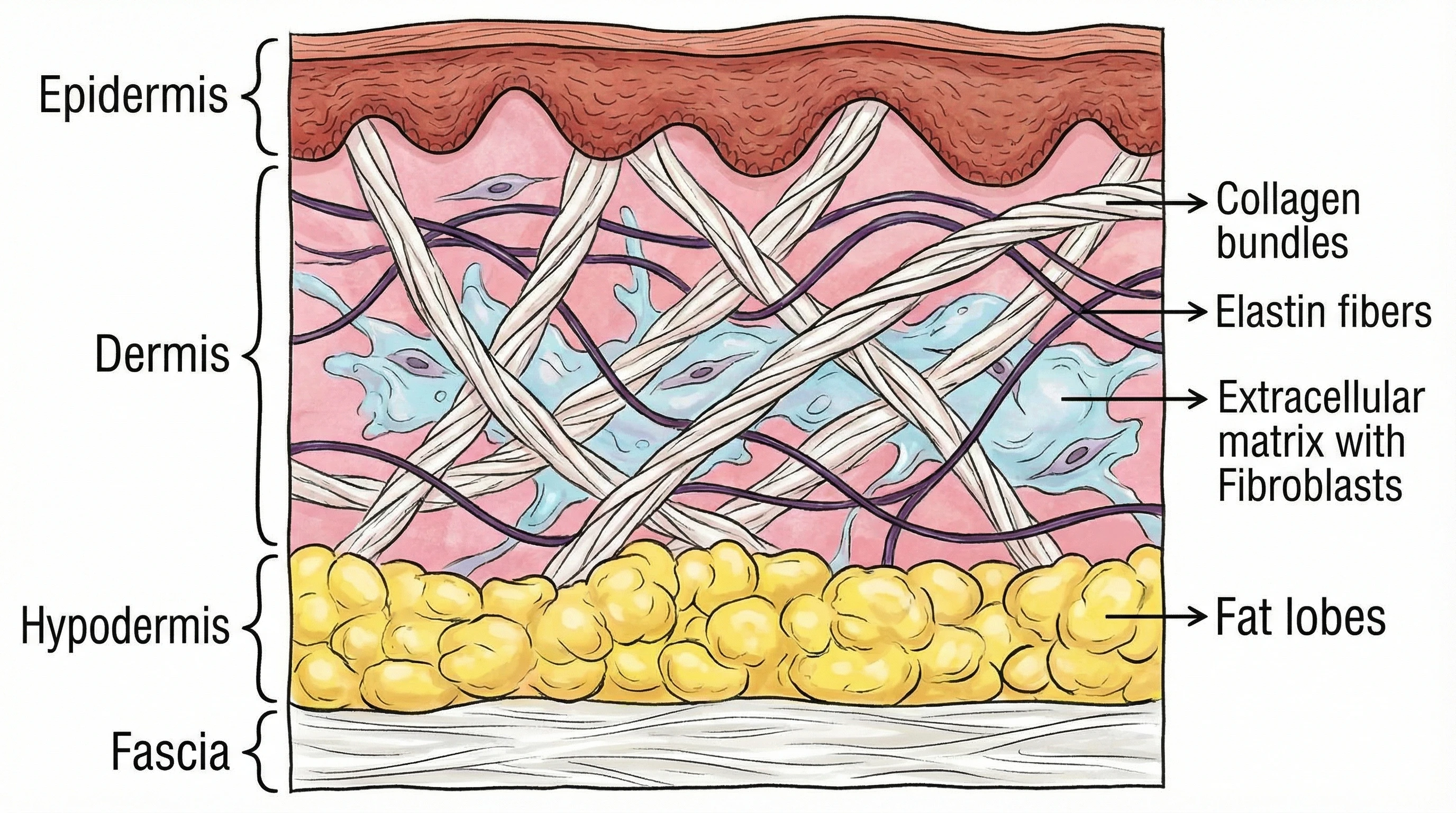
Connective tissue is made up of several components you’ll often see talked about: fascia (a flexible sheath wrapping your muscles), bundles of collagen fibers (providing firmness), elastin (making skin and tissue stretchy), and the extracellular matrix (a gellike environment holding everything together).
These parts work together to determine how tight or loose your skin feels and appears. Healthy, organized connective tissue keeps skin looking smooth and resilient, giving you that bounce and tension that’s often seen as youthful. When collagen and elastin break down, or the extracellular matrix becomes less stable, tissue can weaken or get patchy. That’s when skin starts to show lumps and dimples. Weak, uneven connective tissue lets fat cells push through to the surface, which shows up as cellulite.
What Remodeling Actually Means (Not Just “Tightening”)
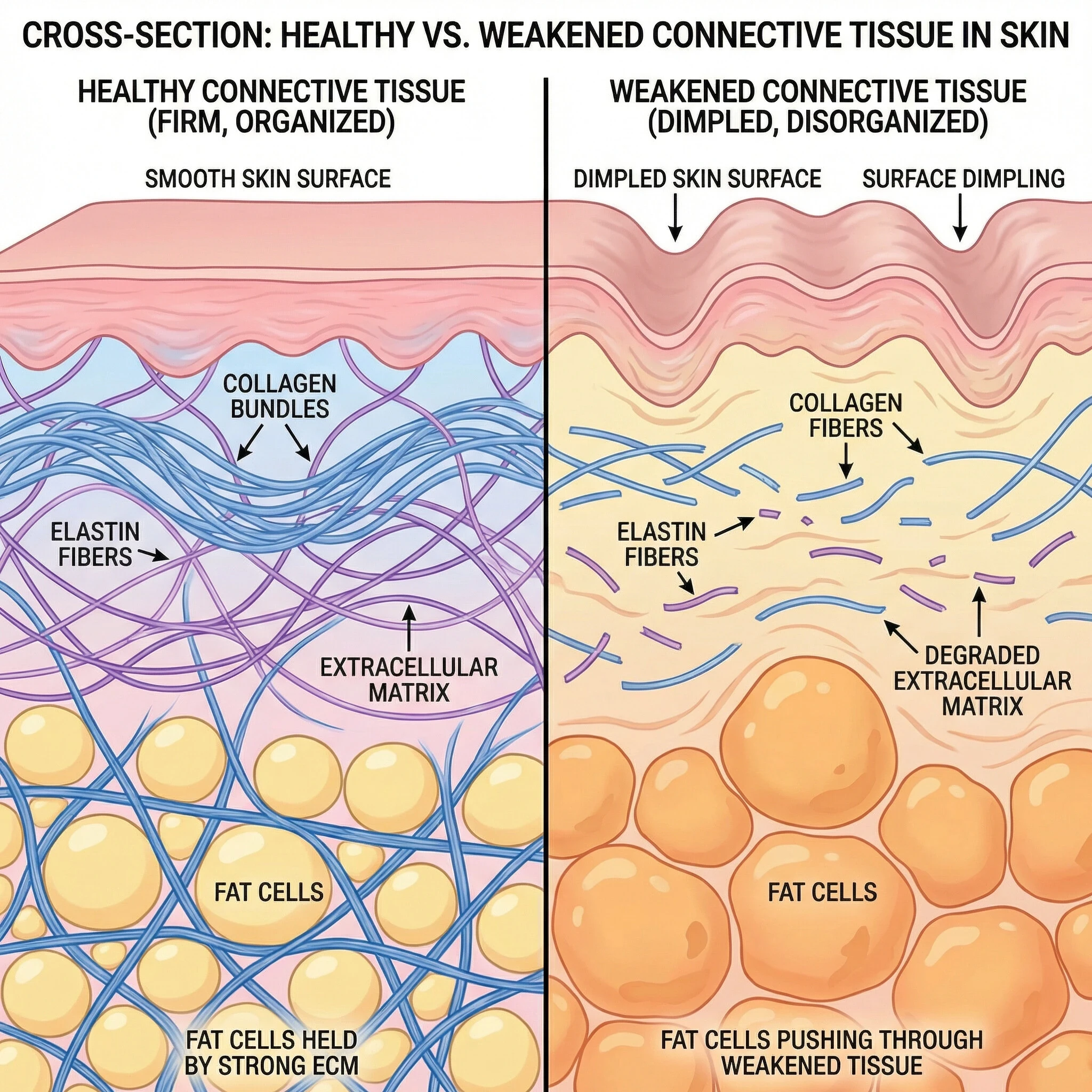
Remodeling is much more than just “tightening up.” It’s really a cycle: tissue breaks down damaged fibers, then builds new, healthy fibers in the right places. Much of this process is driven by special cells called fibroblasts. Think of them as your body’s construction crew, always clearing out the old and laying down new materials like collagen and elastin.
This isn’t a quick job. Collagen turnover runs in cycles that can take several weeks to several months. For true remodeling, it’s about breaking down what doesn’t work and steadily rebuilding it with better, more organized fibers. That’s why results from healthy habits or mechanical stimulation show up gradually and become more obvious as months pass.
This process is biological; you can’t fool your tissue with temporary solutions. The structure has to change beneath the surface before you see visibly smoother skin.
Mechanical Load and Tissue Adaptation
Your connective tissue is designed to respond to mechanical cues. Load, tension, and compression all send signals that trigger adaptation. Moving, stretching, using resistance, and targeted strength exercises apply productive stress to tissue, prompting repair and rebuilding cycles. Without mechanical load, connective tissue starts to get weaker and disorganized, which helps explain why a sedentary lifestyle often makes skin look less firm or even more lumpy.
This explains why consistent strength training, resistance routines, and even targeted bodyweight movements are far more effective than passive treatments. Everyday movement, flexibility work, and gentle stretching all send signals that your tissue needs to stay strong and organized.
Massage and certain tools can warm up tissue and promote short-term blood flow, but they don’t create the lasting workload your body needs to actually rebuild new collagen or strengthen underlying structures.
Blood Flow, Oxygenation, and Nutrient Delivery
Connective tissue thrives with strong circulation. Good blood flow brings oxygen and nutrients to fibroblasts, the cells responsible for repair and growth. Without a steady supply, tissue can get stiff, cranky, or slow to heal. Stagnant tissue means changes happen slowly or not at all, and that visible “healthy glow” becomes much harder to achieve.
Physical activity makes a huge difference here. When you move, your body increases microcirculation, delivers nutrients, and speeds up cellular repair. Even regular walking, strength circuits, or basic flexibility routines keep the tissue active, healthy, and responsive enough to remodel. Passive approaches like topical creams might briefly improve circulation, but these effects fade quickly and don’t cut deep to the root of tissue remodeling.
Hormones, Aging, and Structural Changes
Hormones impact connective tissue more than most people realize, especially estrogen. Estrogen supports collagen production and keeps the structure under your skin more resilient and organized. As estrogen levels decline with age (especially after menopause), collagen production drops, and connective tissue can thin out or weaken. This is a major reason why cellulite and skin dimpling tend to increase as people get older.
This has nothing to do with “bad fat” or a weight issue; it’s a normal, structural response to hormone shifts and the passage of time. Genetics also affect how strong or organized your connective tissue is, so some people notice these changes sooner or see them get more pronounced.
Normalizing these changes and supporting them with realistic lifestyle tweaks beats quick-fix products designed to shame or cover up very normal body processes.
Why Quick Fixes Don’t Change Tissue Structure
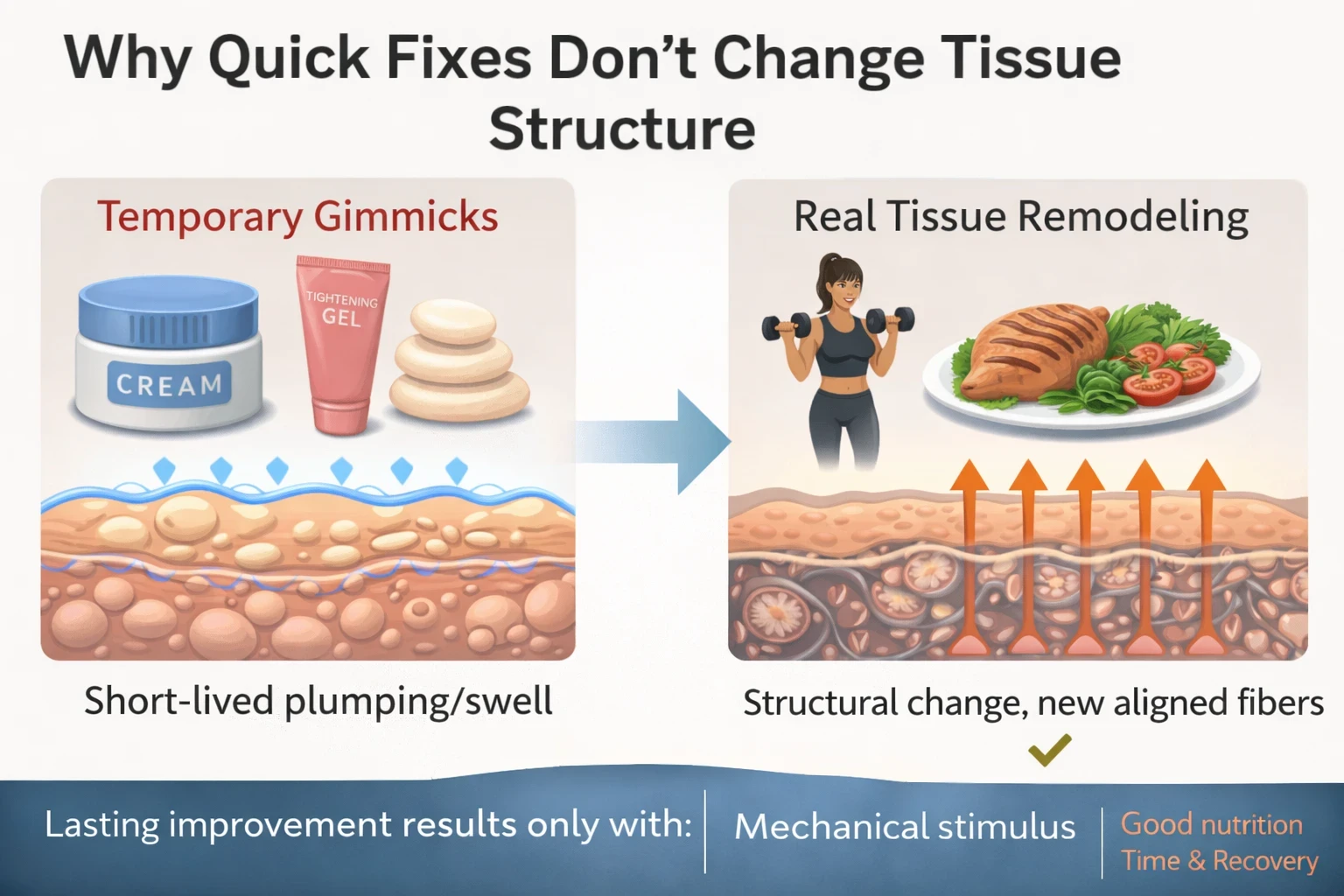
Shelves are full of creams and temporary tightening gels promising to erase dimples instantly. These mostly cause a short-lived plumping effect by swelling the upper skin layer or briefly increasing blood flow at the surface. They don’t repair or rebuild the foundational connective tissue underneath.
Lasting change happens deeper, through signals that prompt repair proteins and stimulate new collagen and elastin. It takes consistent stimulus, true recovery, and a long-range approach. The cycle of breakdown and repair only results in visible, lasting improvement if you give your body a reason (mechanical load, good nutrition) and the time to build strong, well-aligned fibers.
It’s totally fine to use skin products for hydration or comfort, but true structural improvement requires a mix of stress (from movement or resistance), the right nutrition, and more patience than most companies would have you believe.
What Actually Supports Connective Tissue Remodeling
- Progressive Mechanical Stimulus: Regular use of muscles, stretching, and applying resistance encourage your body to make tissue stronger, organized, and more resilient. Staying static or using only passive measures won’t get you there.
- Adequate Protein and Nutrients: Protein (especially collagen-rich foods), vitamin C, and key minerals provide the building blocks fibroblasts use to generate robust new fibers. Skipping these slows or halts repair.
- Consistency and Recovery: Remodeling takes patience. You need to introduce new stress and allow enough recovery for your body to repair, rebuild, and strengthen before you start to see differences.
- Time Under Proper Load: Results won’t appear overnight. Usually, you’re looking at weeks or months to see visible smoothing as tissue cycles through strengthening and repair rounds.
These ideas are the real foundation for any method or routine you choose. Specific exercise methods, like Joey Atlas Symulast exercises, actually use these principles by targeting connective tissue with calculated movement and resistance. You can check out a super detailed breakdown of Symulast here: Joey Atlas Symulast exercises review.
Frequently Asked Questions
What’s the main reason connective tissue affects skin appearance?
Connective tissue forms the real support structure under your skin. If it’s organized and robust, your skin looks smoother. If it weakens or becomes patchy, the surface reveals dimples or lumps. Contrary to popular belief, it’s not all about body fat; it’s mostly about what’s going on beneath the skin.
Can creams or massages truly change tissue structure?
No skin cream can rebuild collagen under the surface. Massage is helpful for temporary comfort and boosting blood flow near the surface, but actual remodeling requires repeated movement, stimulus, and giving your body nutrients so it can create new fibers.
Does age always make cellulite worse?
Not for everyone, but it’s common. Hormone changes, especially lower estrogen, mean your body slows down collagen and elastin production, weakening tissue. Genetics and activity levels determine how fast or slowly these changes show up.
Is cellulite linked to being overweight?
It’s much more about connective tissue health than just body fat. Cellulite becomes visible when fibers aren’t strong enough to hold fat cells back, no matter your body type. Many people—of all sizes—see it because it’s rooted in structure, not just size.
How can exercise improve connective tissue remodeling?
Consistent strength work and general movement stress the tissue in positive ways, nudging your body to build stronger and more organized fibers. Targeted routines like Symulast focus on this very idea.
Realistic Expectations and the Path Forward

Improving the appearance of cellulite and smoothing skin really comes down to patience and supporting your body’s ability to remodel connective tissue. Forget about burning fat alone or looking for instant fixes. The true solution is to supply steady challenges for your tissue, fuel it properly, and stick with your efforts for months, not just days.
This approach lays the groundwork for lasting changes that accumulate with time. If you want guidance that walks you through this process step by step, it’s worth checking out the Joey Atlas Symulast exercises. Give your body the consistency and stimulus it needs and you’ll set the stage for real, visible change.
Leave a Reply