If you’ve found yourself frustrated by dimpled skin that won’t respond to exercise, diet, or hydration, you’re far from alone. Cellulite affects the overwhelming majority of women, and the market for supposed fixes is enormous. Compression garments — leggings, shorts, shapewear — have become one of the more popular options, with brands promising smoother-looking skin and more confidence in fitted clothing.
So, do compression garments help with cellulite? The evidence suggests they can temporarily reduce how noticeable cellulite appears by improving circulation and reducing fluid retention in the skin. But they do not permanently alter the underlying fat and connective tissue responsible for cellulite. Understanding what these garments can realistically do — and where their limitations begin — is the foundation for making any informed decision about using them.
What Causes Cellulite in the First Place?
Cellulite forms when pockets of fat push upward against the skin while fibrous connective tissue bands, called septae, pull the skin downward at fixed points. The result is the characteristic dimpled or uneven surface most visible on the thighs, buttocks, and hips.
The fat itself is not unusual. What creates the appearance of cellulite is the structural relationship between fat cells and those connective tissue bands. When fat cells expand, they press against the underside of the skin. The septae, which are relatively inflexible, hold the skin taut at specific anchor points. Instead of a smooth surface, you get a quilted or lumpy texture. For a closer look at why these bands matter so much, see this guide on connective tissue remodeling and cellulite.
Hormones play a meaningful role as well. Estrogen influences both how fat is distributed and how connective tissue behaves, which is why cellulite tends to emerge or worsen during hormonal transitions such as puberty, pregnancy, and menopause. Fluid retention adds another layer of complexity. When excess water accumulates in the skin’s deeper layers, it exaggerates the appearance of cellulite — something many women notice cyclically.
Poor circulation compounds this further. Sluggish blood and lymphatic flow means fluid lingers beneath the skin rather than being cleared efficiently, making the surface texture more pronounced. Genetics also exert significant influence over whether and how visibly cellulite develops, which is why body fat percentage alone is not a reliable predictor. Even lean or athletic individuals may have noticeable cellulite, while some people with higher body fat may have very little. According to an evidence-based review of cellulite, skin thickness declines with age, which tends to make dimpling more visible over time regardless of lifestyle.
How Compression Garments Work
Compression garments apply consistent, graduated pressure to the body’s soft tissue. That pressure serves several mechanical functions that go beyond simply holding things in place.
The most direct effect is external compression of the skin and underlying tissue. This redistributes superficial unevenness and creates a smoother surface profile while the garment is worn. At the same time, the pressure encourages venous return — helping push blood back toward the heart rather than allowing it to pool in the lower limbs. This is one reason compression wear has long been used therapeutically for people who stand or sit for extended periods.
Compression also supports lymphatic drainage. The lymphatic system relies on muscle movement and external pressure to move fluid through the body, unlike the cardiovascular system, which has the heart as a pump. By applying consistent pressure, compression garments can assist the lymphatic system in clearing excess interstitial fluid, which reduces puffiness and softens the appearance of the skin above.
It’s worth distinguishing between compression garment types, since the pressure they deliver varies considerably. Athletic or everyday compression leggings typically deliver mild compression, usually under 20 mmHg. This level is enough to offer circulatory support and surface smoothing during activity or daily wear. Therapeutic compression garments, often used for conditions like mild lymphedema or varicose veins, generally start at 20 to 30 mmHg and are designed to do more measurable physiological work. Medical-grade compression exceeds these levels and is prescribed by a clinician for specific conditions. Wearing medical-grade compression without guidance is not appropriate for general cosmetic use and can cause discomfort or, in some cases, harm.
Do Compression Garments Help With Cellulite?

Compression wear for cellulite has become widespread largely because the short-term visual effect is real and immediately noticeable. Putting on a pair of firm leggings often does make the skin look smoother. The important distinction is between that temporary change in appearance and any lasting structural improvement.
Temporary smoothing is the most consistent benefit. The garment presses against the skin’s surface, redistributing tissue unevenness and flattening the profile. Fat cells are not removed or altered; they are simply held under more even pressure. Once the garment comes off, the skin returns to its baseline state.
Circulation support is a secondary benefit that may contribute to the visual effect. Improved venous return means less fluid pooling in the legs and hips, which can make cellulite look less prominent after long periods of sitting or standing. This is not a treatment effect — it is a temporary physiological response.
Fluid retention reduction is related. Compression garments can help mobilize excess interstitial fluid, which is particularly relevant for women who notice cyclical puffiness that worsens cellulite’s appearance. The effect, while real, fades within hours.
What compression garments cannot do is equally important to understand. They do not remove or permanently reduce fat cells. They do not break up or soften the septae responsible for the tethered, dimpled appearance that defines cellulite. They do not improve skin elasticity or tighten loose skin. Any change in appearance from compression wear for cellulite is reversible and temporary.
How Long Do Compression Garments Reduce the Appearance of Cellulite?
The smoothing effect that compression garments produce lasts only as long as the garment is being worn. Once removed, the tissue returns to its natural state, typically within a few hours at most. There is no evidence that repeated or prolonged use accumulates into any lasting structural change in the skin or underlying tissue.
Some people notice that skin looks slightly smoother immediately after removing a compression garment than it does after a full day without one, which may be partly related to the temporary fluid displacement effect. This does not represent a treatment outcome. A study on anti-cellulite compression hosiery confirms that cellulite treatment with compression garments, in the clinical sense, is not a recognized category of intervention precisely because the structural causes of cellulite — fat cell expansion and fibrous band tethering — remain unchanged.
If the goal is to do compression leggings reduce cellulite in any durable way, the answer from available evidence is no. Their value lies in temporary cosmetic improvement and circulatory support, both of which are legitimate and useful — they simply need to be understood for what they are.
Compression Leggings vs. Shapewear vs. Medical Garments
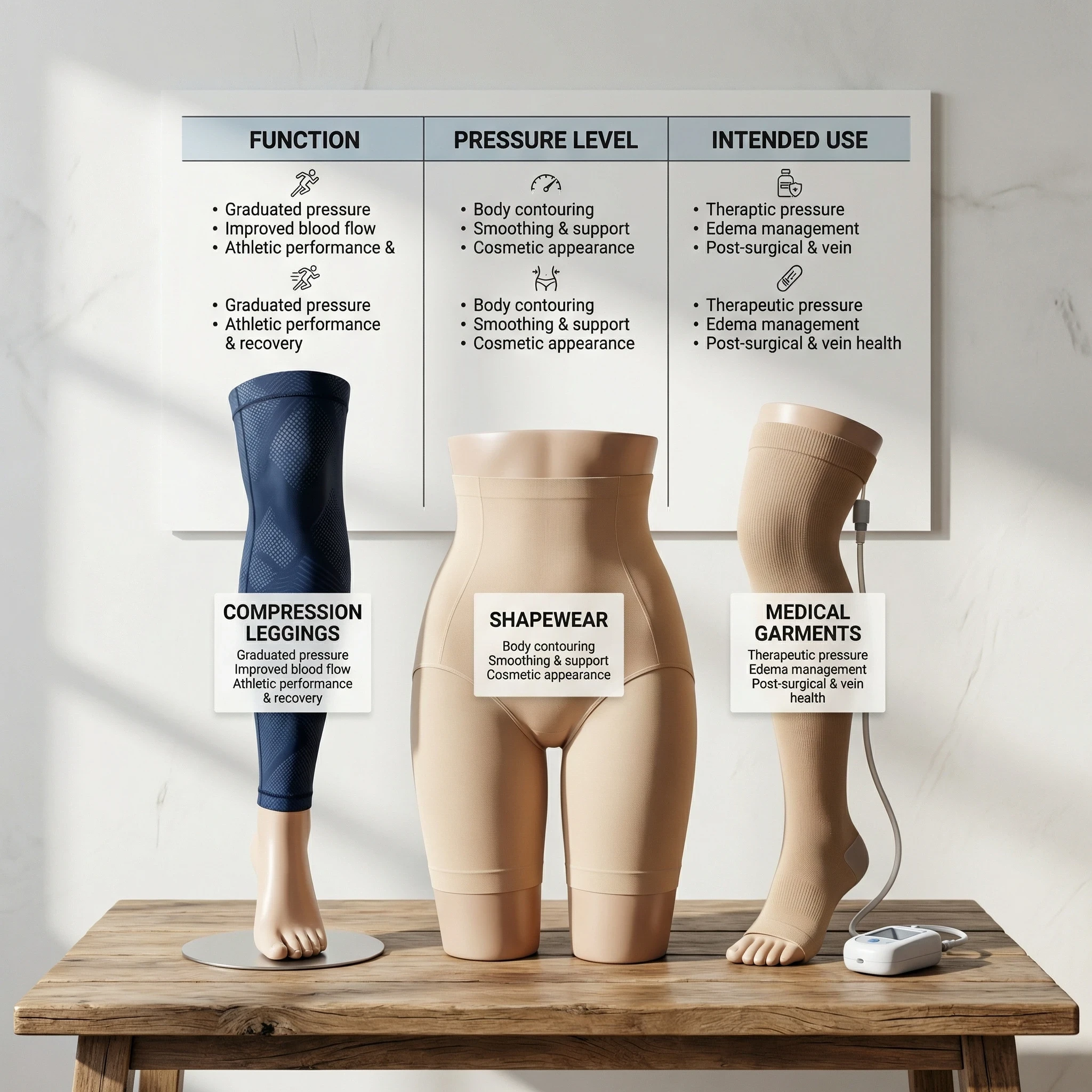
Not all compression gear is interchangeable. The type of garment, its construction, and the level of compression it delivers all affect what you can reasonably expect from it.
Compression leggings designed for athletic or everyday wear provide mild, consistent pressure across the legs and hips. They offer comfort during activity, reduce friction, and can improve the appearance of cellulite while worn. Compression levels vary widely by brand and are rarely standardized outside of medical categories. Construction quality matters here as well — higher-quality fabrics with moisture-wicking properties maintain their compression more reliably over time and across multiple washes.
Shapewear, including bike shorts, briefs, and bodysuits, is primarily designed for silhouette shaping under clothing rather than circulatory support. Pressure is typically higher than in athletic leggings and more concentrated. Worn for occasional, shorter durations, shapewear is generally safe for most people. Worn all day in sizes that are too small, it can cause discomfort and, in some cases, restrict circulation or irritate skin — particularly at the waist and groin.
Medical-grade garments are prescribed and fitted for specific conditions. Using them without clinical guidance is unnecessary for general cosmetic purposes and can be counterproductive. If you have a vascular or lymphatic condition and are considering any form of compression, a healthcare provider should be involved in that decision.
Duration of wear matters regardless of garment type. Everyday compression leggings worn for normal activity hours are appropriate for most healthy adults. Shapewear worn for extended periods, particularly pieces that feel restrictive, should be monitored for discomfort. Any garment that leaves deep marks, causes numbness, or produces tingling should be resized or discontinued.
When Compression Is Most Useful
Compression garments are not effective cellulite treatments in the structural sense, but there are specific contexts in which they provide genuine, if temporary, benefit.
During workouts, compression leggings offer muscle stabilization and warmth in addition to the cosmetic effect. A pilot study on compression garments and cellulite supports some improvement in participant satisfaction with thigh appearance after several weeks of consistent wear, though lasting structural change was not observed.
Long-distance travel is another situation where compression wear earns its place. Extended sitting during flights or long drives promotes fluid pooling in the lower limbs. Compression helps counteract this, reducing the puffiness that can make cellulite appear more pronounced by the end of a journey.
After lymphatic massage, compression can extend the drainage benefit by helping the tissue maintain reduced fluid levels longer. This is why some practitioners recommend wearing compression garments in the hours following a manual lymphatic drainage session.
For people who stand or sit for long hours at work — nurses, teachers, office workers, flight attendants — compression wear offers cumulative support for circulatory health. The smoother skin appearance while wearing it is secondary to those functional benefits.
How Compression Compares to Other Cellulite Approaches
True cellulite reduction, rather than temporary visual improvement, requires targeting the structural causes: fat volume, fibrous band rigidity, and skin quality. Compression wear does not address any of these directly. Understanding where it sits relative to other options helps set appropriate expectations.
Strength training builds muscle beneath the skin, which can improve surface texture and reduce the relative proportion of fat to lean tissue. It does not eliminate cellulite, but meaningful reductions in body fat combined with increased muscle mass can make dimpling less visible. Diet supports this process by influencing overall body composition, though fat reduction alone does not guarantee visible cellulite improvement.
Manual lymphatic massage and dry brushing produce effects similar to compression in that they temporarily reduce fluid and puffiness. They do not alter connective tissue bands or permanently shrink fat cells.
Radiofrequency and laser-based treatments are among the more evidence-supported options for producing lasting improvements in cellulite appearance. These modalities heat the skin and connective tissue, stimulating collagen production and in some cases mechanically disrupting fibrous bands. Results vary and typically require multiple sessions, but the changes observed in controlled studies are more durable than anything achievable with compression wear. If you’re considering in-office options, the Cellusmooth cellulite treatment review and the Cellulaze cellulite treatment review cover two of the more well-known professional procedures.
Cellulite treatment with compression garments fits most honestly into the category of supportive or adjunctive care rather than primary treatment. Used alongside exercise, healthy body composition maintenance, and appropriate skincare, they contribute to a reasonable management approach. Used in isolation with the expectation of structural improvement, they will consistently underperform.
Who Should Exercise Caution With Compression Garments?
For most healthy adults, wearing compression leggings or shapewear is safe. There are, however, situations in which speaking with a healthcare provider first is appropriate.
Peripheral artery disease and other arterial circulation disorders can make compression garments risky, as external pressure may compromise already-reduced blood flow. Severe varicose veins or a history of deep vein thrombosis also warrant medical input before using any form of compression. Similarly, people with diabetes-related vascular changes should get guidance on appropriate compression levels before use.
Skin that is broken, infected, or significantly inflamed should not be compressed with tight garments, as this can delay healing and increase the risk of further irritation. Allergies to latex or synthetic fabrics are worth checking before purchasing, since many compression garments use these materials.
If any compression garment causes persistent numbness, tingling, pain, or leaves marks that do not fade within a short time, it is either sized incorrectly or exerting too much pressure. Sizing up or switching to a lower-compression option is the appropriate response.
Final Verdict

Compression garments offer real, if temporary, benefits: improved surface smoothness while worn, circulatory support, and modest assistance with fluid retention. These are legitimate reasons to use them, particularly during workouts, travel, or periods of cyclical fluid retention.
They are not, however, a structural cellulite treatment. The dimpling caused by expanded fat cells pressing against fibrous connective tissue bands is not resolved by surface pressure. No amount of compression wear alters the septae, reduces fat volume, or permanently improves skin elasticity. Anyone considering compression garments as a primary cellulite intervention should have realistic expectations about what the evidence actually supports.
Used as part of a broader approach that includes strength training, healthy body composition, and consistent skin care, compression wear has a sensible supporting role. If you’re looking for approaches with more lasting potential, explore the top non-invasive cellulite treatments and products that work to build a smarter long-term strategy. As a standalone cellulite solution, compression garments do not deliver.
Frequently Asked Questions
Do compression garments help with cellulite permanently? No. Compression garments produce a temporary smoothing effect by redistributing superficial tissue and reducing fluid retention. This effect reverses within hours of removing the garment. There is no clinical evidence that compression wear permanently alters the fat cells, fibrous bands, or skin quality responsible for cellulite.
Do compression leggings reduce cellulite over time with repeated use? Regular use of compression leggings does not accumulate into structural improvement. The circulatory benefits are real and worth having, but the appearance of cellulite returns to baseline each time the garment is removed. If the underlying causes are not addressed through other means, cellulite remains unchanged long-term.
How long should you wear compression garments? For everyday athletic leggings or mild shapewear, wearing them for normal active hours is appropriate for most people, provided they fit comfortably and do not cause pain or restricted movement. Medical-grade garments come with specific wear time instructions from the prescribing clinician, and those guidelines should be followed carefully.
Are tighter garments more effective for cellulite? Tighter is not better. Garments that apply excessive pressure can restrict circulation, cause discomfort, and leave marks on the skin. The appropriate level of compression feels supportive without pinching, and the garment should not dig into the skin at edges or waistbands. For general cosmetic use, mild athletic compression is sufficient.
Can compression garments make cellulite worse? There is no evidence that properly fitted compression garments worsen cellulite. Garments that are significantly too tight and worn for prolonged periods may irritate the skin or temporarily restrict blood flow, but this does not create new structural changes associated with cellulite.
What To Focus on If You Want Longer-Term Improvement
If your goal is lasting improvement rather than temporary smoothing, focus on approaches that influence body composition, connective tissue quality, and circulation more directly. Strength training plays a particularly important role because it targets the structural foundation beneath the skin.
If you want to understand how targeted glute and thigh exercises are designed specifically for cellulite-prone areas, you can read my detailed review of the Joey Atlas Symulast method here.
Compression garments can support confidence and short-term appearance. But long-term change requires structural work.
Leave a Reply