Compression garments have become a go-to tool for anyone looking to support circulation, manage mild swelling, and temporarily smooth the appearance of cellulite. A lot of people slip on compression leggings or shorts simply because the steady pressure feels supportive and gives skin a noticeably smoother look throughout the day.
The results you get can depend on the specific garment, how well it fits, and your everyday habits. There is a real difference between grabbing a random pair of “compression” leggings off the rack and choosing something genuinely built for compression therapy. If you are wondering how to choose compression garments for cellulite, the most important factors include compression level, garment type, material quality, and proper fit. This guide walks you through each one.
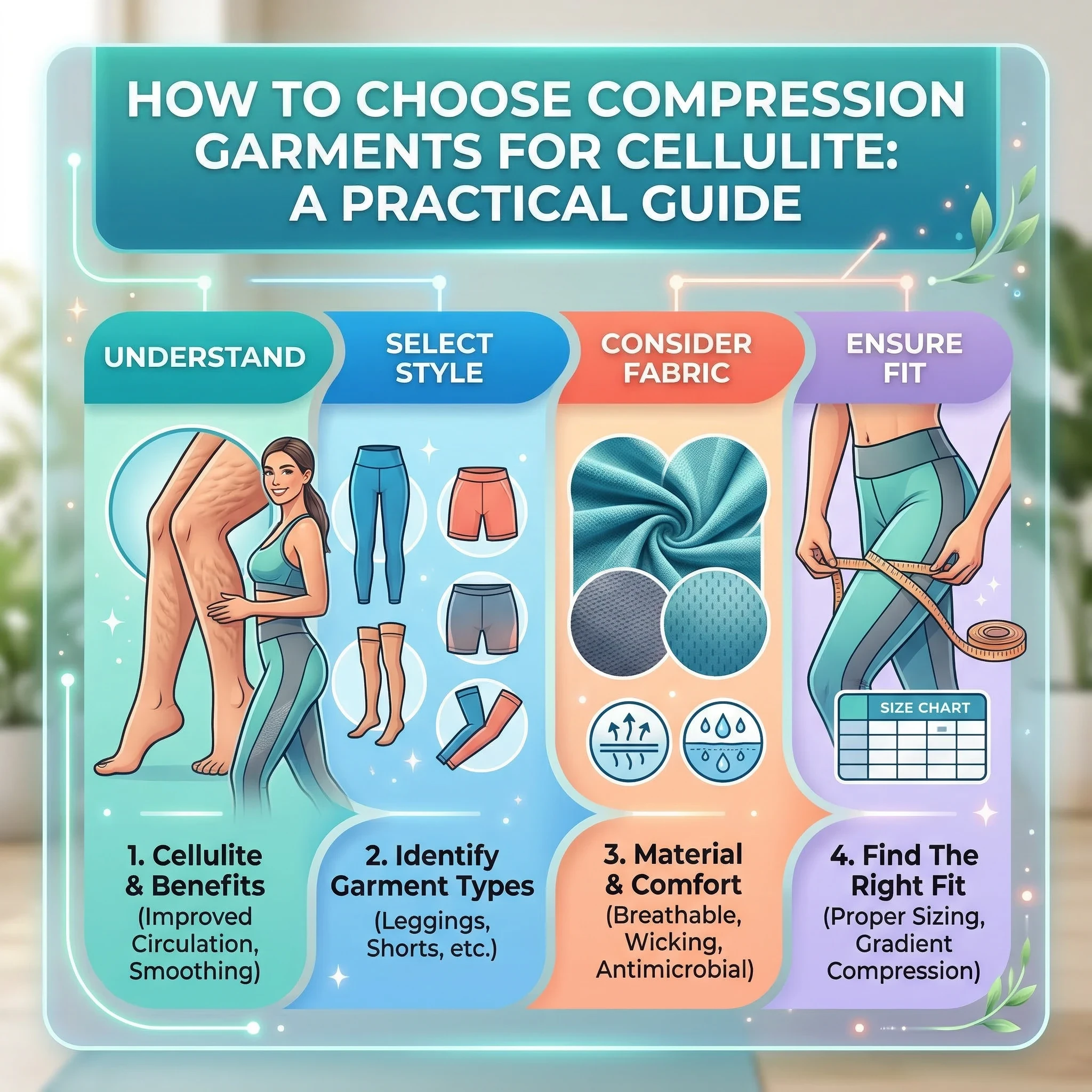
Why People Use Compression Garments for Cellulite
The best compression garments for cellulite are not miracle fixes. That said, many people and health professionals believe they offer genuine, practical benefits. Here is what is actually happening beneath the fabric.
• Improved circulation: Compression gently squeezes soft tissue and blood vessels, encouraging better blood flow in the areas where cellulite tends to collect.
• Lymphatic support: The applied pressure can boost lymphatic drainage, the system responsible for clearing waste and excess fluid. Better lymph flow may reduce puffiness, which can make skin look less dimpled, at least temporarily.
• Reduced minor swelling: For some people, mild fluid retention in the thighs or glutes makes cellulite more visible. Compression can help minimize that extra puffiness in those spots.
• Surface-smoothing effect: Quality compression leggings or shorts hug the body closely, evening out skin texture and holding things steady for a visibly smoother appearance.
It is worth being clear about one thing: compression garments do not change the underlying structure of cellulite or eliminate it permanently. What you will see is a temporary improvement in skin appearance. Managing expectations honestly is what leads to long-term satisfaction with these products.
Step 1: Understand Compression Levels (mmHg)
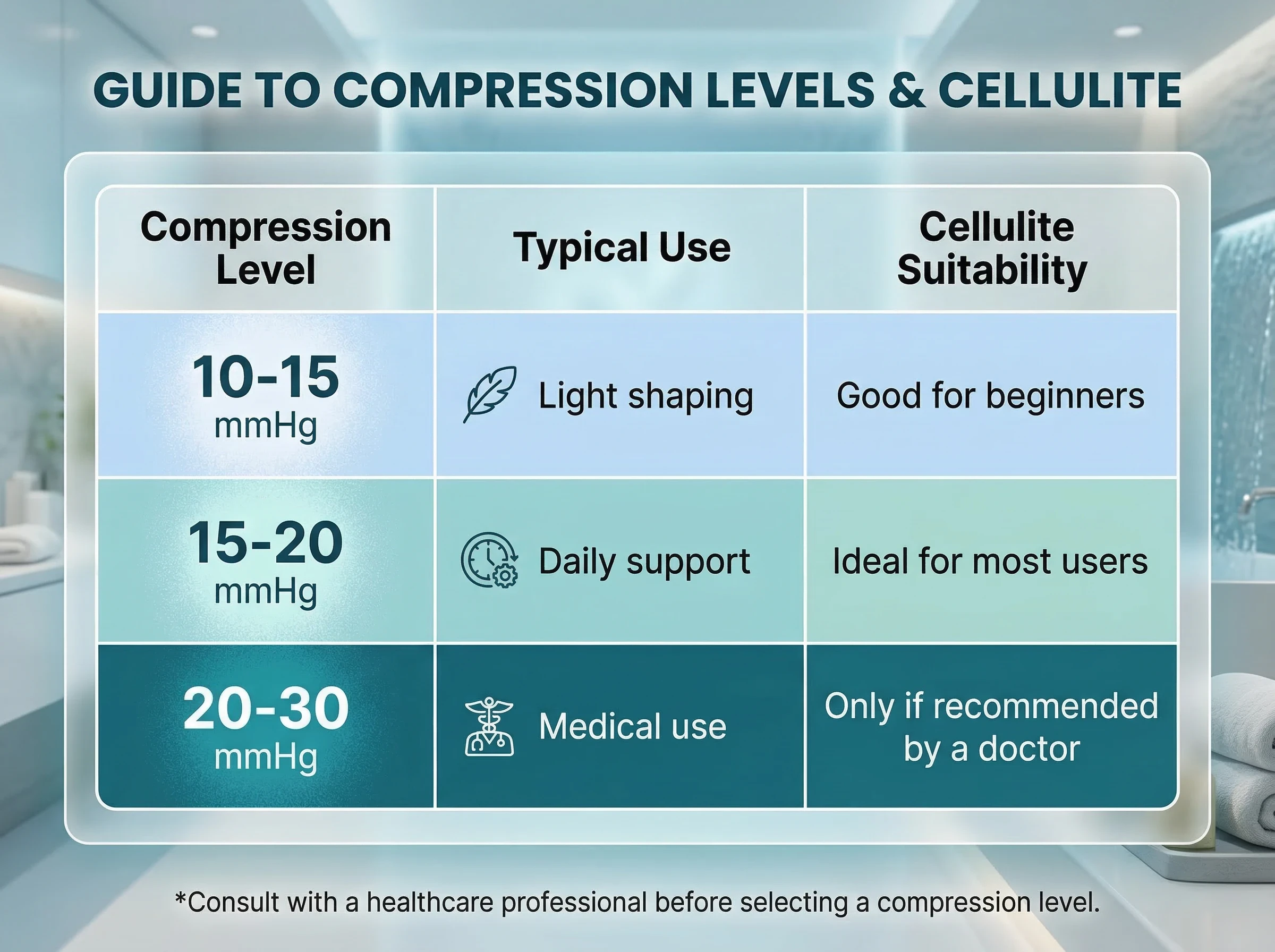
Compression garments are rated by the amount of pressure they apply, measured in millimeters of mercury, or mmHg. Getting the right compression level makes a significant difference in both comfort and results.
• Mild Compression (10-15 mmHg): This level feels gentle and is well-suited for all-day wear. It is commonly found in athleisure styles that offer a smoothing effect without much intensity. If you are new to compression, this is a sensible starting point.
• Moderate Compression (15-20 mmHg): Noticeably firmer, with more support. This range is sometimes referred to as light medical grade and works well for daily wear or active routines. It takes a short adjustment period, but most people find it very manageable after a few wears.
• Higher Compression (20-30 mmHg): Used primarily for specific medical conditions. For general cellulite management, these levels are usually unnecessary and should only be worn if a healthcare provider recommends them.
In practice, mild to moderate compression is the easiest range to start with and the most realistic for daily wear. You can always move up a level once you are comfortable, but sticking with moderate compression is perfectly fine for most people. The best compression garments for cellulite are ultimately the ones you will actually wear consistently.
Step 2: Choose the Right Garment Type for the Area
What you buy depends largely on which areas you want to support. Each garment style is designed with a different coverage zone in mind.
• Compression leggings: The most popular option for cellulite. They cover hips, thighs, and glutes, which are the most common problem zones. A good pair works equally well for daily wear and exercise.
• Compression shorts: More targeted coverage for the upper thighs and backside. Easy to layer under clothes and a practical choice during warmer months.
• Compression tights: Pantyhose-style coverage from waist to toe. Ideal for consistent lower body support and easy to wear under dresses or skirts.
• Compression bodysuits: Covers the midsection, hips, thighs, and glutes in one piece. A solid choice for anyone who wants fuller coverage and all-over smoothing.
There is no single right answer here. Think about your main concern areas, your typical wardrobe, and what you will comfortably wear day to day. If the thighs are the focus, shorts may be all you need. For broader coverage, leggings or tights tend to be the more practical choice.
Step 3: Look for Quality Materials and Fabric Technology
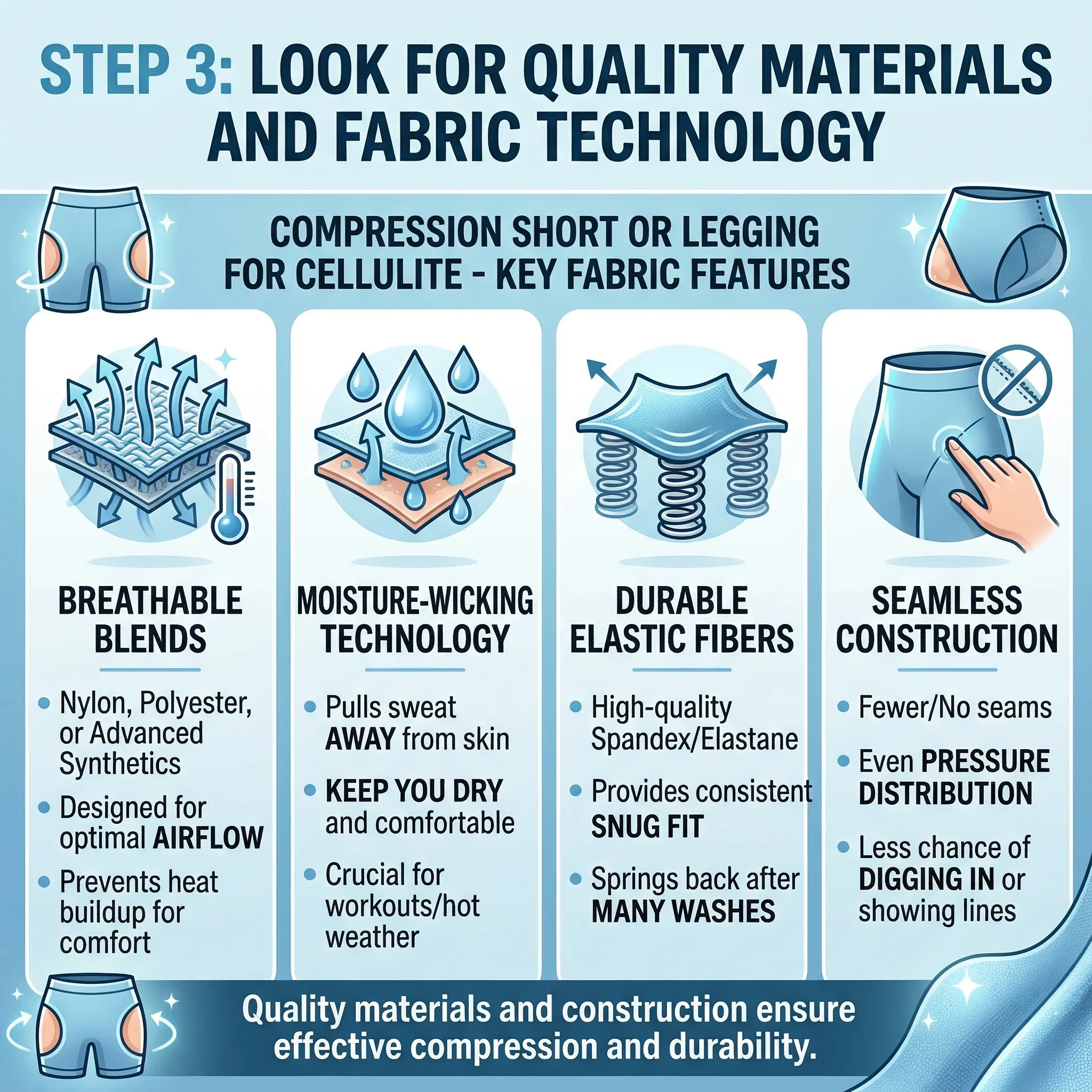
Materials can make or break a compression garment. Good compression shorts or leggings for cellulite should stretch comfortably, hold their shape after repeated wears, allow your skin to breathe, and stay in place without rolling or digging in.
This is where fabric technology starts to matter. Here is what to look for.
• Breathable blends: Look for nylon, polyester, or advanced synthetic fabrics designed for airflow. Well-ventilated materials prevent heat buildup and keep things comfortable during long wear sessions.
• Moisture-wicking technology: These fabrics pull sweat away from the skin, keeping you dry. This matters most if you are working out in compression wear or wearing it during hot weather.
• Durable elastic fibers: Spandex or elastane provides the signature snug fit. Higher-quality options spring back even after many washes. Cheaper versions often lose their stretch and stop providing real compression after just a few weeks.
• Seamless construction: Fewer seams mean more even pressure distribution and less chance of the garment digging in or showing visible lines through clothing.
How a garment is constructed matters just as much as what it is made from. Quality construction ensures pressure is delivered where you need it and that the fabric keeps its integrity wash after wash. Brands that are transparent about their fabric technology tend to perform better in real-world use.
Step 4: Proper Fit Is Critical
Fit is the step most people overlook, and it is probably the most important one. Many shoppers focus on their clothing size, but sizing can vary significantly between brands. Compression that is too tight can restrict blood flow or cause pinching. Too loose, and it offers no more benefit than a regular pair of leggings.
• Take real measurements: Use a tape measure to get your hip, widest thigh, and waist measurements. Then compare those numbers against the brand’s specific sizing chart rather than guessing based on your usual clothes size.
• When between sizes: Most brands recommend sizing up for comfort. Always check their specific guidance, since this varies. A little extra research at this stage saves you the headache of a return.
• How it should feel: Compression wear should feel snug but never painful. You should be able to bend, sit, and move freely. It is normal for them to feel a bit of a challenge to pull on, but they should never restrict breathing or leave red marks after wearing.
A properly fitted garment gives you the full smoothing benefit without any discomfort. Reading customer reviews is a solid move, especially when several people mention sizing up or down consistently. For a deeper explanation of how compression garments work, read our full guide on compression garments for cellulite.
Step 5: Consider When and How Long You Will Wear It
Your wearing habits should shape which product you choose. Not every garment is built for every situation.
• All-day wear: Mild to moderate compression is the most realistic for long stretches. Seamless construction and a soft waistband make a real difference in comfort over the course of a full day.
• During workouts: Compression leggings for cellulite that double as workout tights are hugely popular at the gym and for home routines. Look for moisture-wicking fabric and sturdy construction that holds up under movement.
• For post-workout recovery: Many people switch into compression gear after exercise specifically for the circulation boost during rest. It is a simple habit with noticeable benefits over time.
If you have never worn compression before, starting with one to two hours per day and gradually building up is a smart approach. Let your body adjust to the snugness. Once you are used to it, longer wear sessions come naturally, and that consistency is where you will see the most from your compression garments for cellulite.
Step 6: Avoid Common Buying Mistakes
Picking compression garments is more involved than just grabbing something that looks good in the product photo. These are some of the most common mistakes people make.
• Starting with too much compression: Jumping straight into a high-compression garment can feel overwhelming and often leads people to stop wearing them altogether. Starting gently tends to result in better long-term consistency.
• Skipping the tape measure: Guessing your size based on clothing labels almost always leads to poor fit. Taking a couple of minutes to get accurate measurements makes a real difference.
• Expecting permanent cellulite removal: No compression garment eliminates cellulite for good. Keeping expectations realistic means you will not be disappointed and can appreciate the real benefits these products do offer.
• Confusing fashion leggings with compression wear: True compression garments specify an mmHg value or explain their compression technology clearly. Standard fashion leggings labeled as “slimming” or “shaping” rarely provide the structured support needed for genuine cellulite benefits.
Taking the time to read product descriptions and customer reviews before buying will save you money and frustration in the long run.
Can Compression Garments Really Reduce Cellulite?
This is the question most people have when they first start researching. Compression garments, including shorts and leggings, do smooth out skin and make cellulite less visible while you are wearing them. The mechanism involves improved circulation, lymphatic flow support, and light compression working together on the surface. Once you take them off, that skin-smoothing effect fades.
For more lasting improvements in skin texture, compression works best as part of a broader routine that includes regular exercise, a balanced diet, good hydration, and practices like lymphatic massage. Compression garments alone will not erase cellulite, but used consistently alongside other healthy habits, they are a smart addition to a cellulite care routine. Check back soon for a full all-in-one cellulite treatment guide covering how these methods work together.
Who Should Avoid Compression Garments
Most healthy adults can use mild to moderate compression garments without any concern. There are a few situations, though, where it pays to check first before wearing them.
• Circulatory or lymphatic disorders: Always consult your doctor before choosing any compression product if you have a diagnosed condition in either of these systems.
• Open wounds or skin infections: Wait until the area is fully healed before wearing compression clothing over it.
• Recent surgery or major health changes: If you are recovering from a procedure or dealing with a recent health change, getting medical advice first is always the better route.
Medical-grade compression garments at 20 mmHg or more generally require a doctor’s recommendation, since they have a meaningful impact on blood flow. If you are unsure which level is right for you, a quick conversation with a healthcare professional is never a bad idea.
Key Factors When Choosing Compression Garments for Cellulite
To bring it all together, here are the essentials to keep in mind when making your choice.
• Choose a compression level that suits your comfort and goals. Mild to moderate is typically the right range for everyday use.
• Pick a garment style that matches the area you want to address. Leggings, shorts, tights, and bodysuits each have their own strengths depending on your coverage needs.
• Prioritize material quality and construction. Breathable, moisture-wicking fabrics with durable elastic fibers will perform far better over time than budget alternatives.
• Measure accurately for the right size. Real numbers beat guesswork every time, and the fit is what makes compression therapy actually work.
• Put comfort and consistency first. These garments work best when worn regularly, and that only happens when wearing them feels good.
When in doubt, customer reviews and advice from knowledgeable professionals can point you in the right direction. Choosing based on your own body and lifestyle needs, rather than whatever is trending at the moment, means you will actually use what you buy. Compression garments play a real and valuable role in a skin-smoothing routine. They are one practical piece of the puzzle when it comes to managing cellulite and supporting long-term skin health.
If you want to go deeper into how compression actually affects circulation and cellulite tissue, read our full guide on compression garments for cellulite.
Leave a Reply